
Criminal Court Records in Crawford County
A Crawford County criminal court record begins when a criminal case is filed in District Court. The file can include the charging document, bond or release orders, counsel entries, hearing notices, docket entries, pleas, motions, orders, diversion-related entries when applicable, sentencing orders, probation terms, violation filings, and revocation proceedings. For the narrower arrest-to-charge path, use arrest records and court charges; for custody status, use inmate records; for active court orders, use warrant records.
Crawford County criminal matters are mainly District Court matters. Girard Division lists felony and misdemeanor criminal records from 1991 forward, plus some pre-1977 criminal filings. Pittsburg Division lists bad-check criminal matters. Municipal courts in Pittsburg and Girard can handle city ordinance and city traffic cases, but those are not the same as county District Court criminal files. The Crawford County Attorney prosecutes violations of Kansas criminal laws and appears in related juvenile, child protection, treatment, appellate, and victim/witness matters.
The statewide KBI criminal history record search is separate from the local court case file.
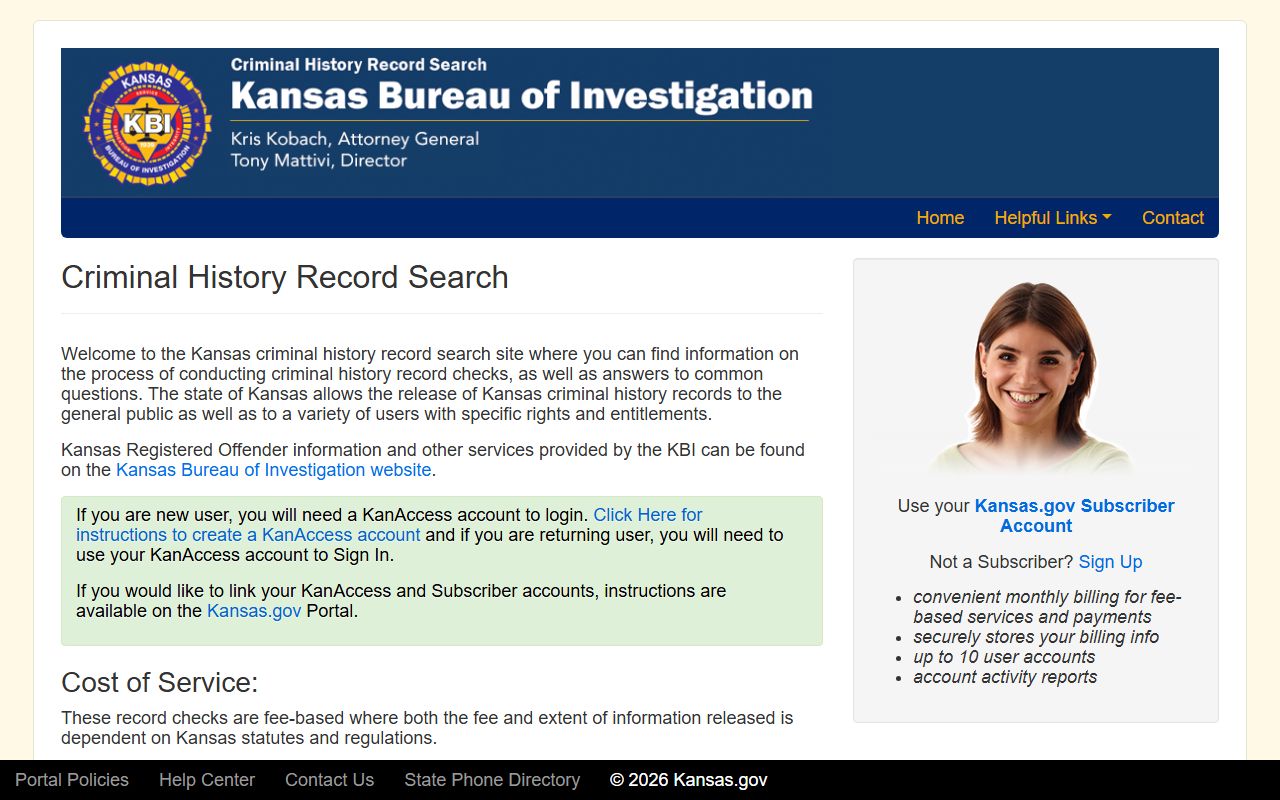
Use that KBI search for a statewide criminal-history check, not as a replacement for Crawford County District Court pleadings or sentencing orders.
How to Search Crawford County Criminal Court Records
Begin with Kansas CaseSearch for public District Court case information and documents. If the case appears in the county's current docket PDFs, use the docket to confirm the next hearing, judge, and case number before ordering records. When a record is not online, write to the correct District Court division. Crawford County requires District Court record-search requests to be in writing, charges 25 cents per page for copies, and lists a $12 hourly search fee if staff research is needed.
- Search Kansas CaseSearch by defendant name or case number and look for Crawford County District Court results.
- Use the case number, CR designation, and local suffix to identify whether the record belongs in Girard or Pittsburg.
- Review docket entries for first appearance, arraignment, preliminary hearing, plea, sentencing, probation violation, or revocation activity.
- Compare the docket with Crawford County's current judge calendar PDFs when a future hearing date is needed.
- Request copies from the Clerk of the District Court if the complaint, journal entry, sentence, or disposition document is needed.
Do not treat the Sheriff's jail roster as the final criminal court record. Booking information can identify a person in custody and may show arrest-related details, but the District Court file shows what the prosecutor filed, whether charges were amended or dismissed, and how the case ended. The full set of public court records is broader and is covered on the court records page.
Stages of a Criminal Case
Criminal court records are easiest to read as a sequence. A case may begin with an arrest or complaint, but the court file develops through hearings and orders. Crawford County docket PDFs reviewed in the research show labels such as First Appearance, Arraign/Plea, Preliminary Examination, Status Conference, Plea Hearing, Sentencing, Probation - Violation, and Revocation. Those labels show what the court is doing at that moment, not necessarily the final outcome.
Case flow: Charges Filed › First Appearance › Arraignment or Plea › Preliminary Examination or Pretrial Activity › Plea or Trial › Disposition › Sentencing › Supervision or Revocation
| Stage | What Happens |
|---|---|
| First Appearance | The defendant appears before the court after filing or arrest, and bond, counsel, and next dates may be addressed. |
| Arraignment / Plea | The charges are addressed and a plea may be entered or scheduled. |
| Preliminary Examination | Felony proceedings may test whether probable cause supports moving forward. |
| Pretrial / Motions | The parties file or argue motions, exchange positions, and prepare the case for resolution. |
| Sentencing | After a conviction or plea, the court enters the sentence, probation terms, fines, costs, or other orders. |
| Revocation | If supervision is alleged to be violated, the court may hold violation or revocation hearings. |
What a Crawford County Criminal Court Record Shows
The criminal court file can show both procedural history and legal outcome. Public docket examples identify State of Kansas vs. defendant, the judge, prosecutor, defense attorney, public defender office, hearing type, date, time, and case number. Full files may also show charging documents, warrants or returns when public, bond orders, counsel entries, plea documents, sentencing orders, probation conditions, revocation filings, and final disposition.
The Crawford County Attorney page identifies the prosecutor role and office locations for county criminal cases.
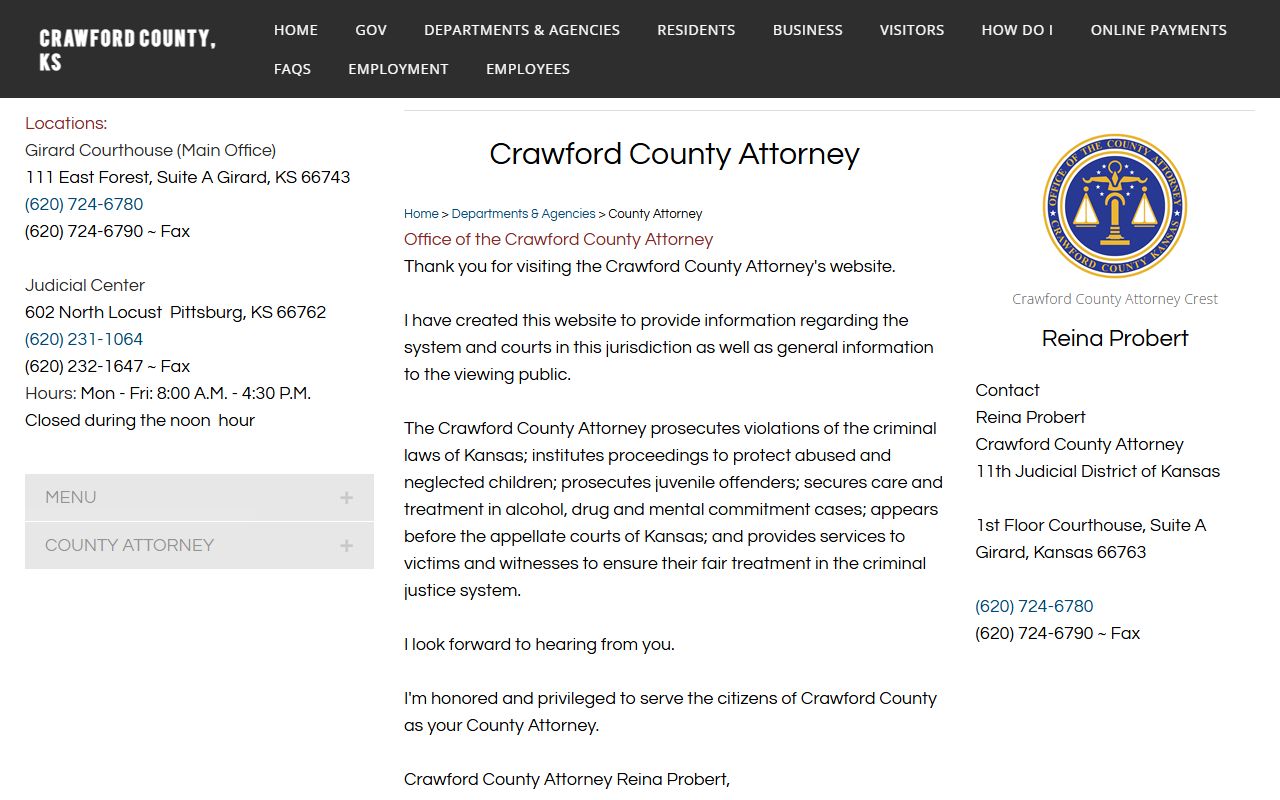
That office is central to criminal filings because it prosecutes Kansas criminal-law violations in Crawford County District Court.
| Field | What It Shows |
|---|---|
| Case Number | Identifies the court case; docket examples include CRG criminal formats and older year-CR-number formats. |
| Defendant | Names the accused person in the State of Kansas vs. defendant case style. |
| Charges | Shows the offenses filed by the prosecutor, which may differ from the initial booking description. |
| Attorneys | May list Crawford County Attorney's Office, CR County Attorney's Office, public defender, appointed counsel, or private counsel. |
| Plea | Shows the defendant's formal response or later plea agreement when public and entered in the file. |
| Disposition | Shows whether charges ended by conviction, dismissal, acquittal, diversion completion, amendment, or another court outcome. |
| Sentence | May show jail, prison, probation, fines, costs, restitution, treatment, supervision, or revocation terms. |
Charges vs. Convictions
A charge is an accusation filed in court. A conviction is an outcome after a guilty plea, verdict, or other adjudication that results in conviction. Crawford County criminal court records can show charges that were filed but later amended, reduced, dismissed, or resolved through diversion. A docket entry showing a pending charge or hearing should not be read as a conviction.
| Charge | Conviction | |
|---|---|---|
| Stage | Filed accusation | Final or adjudicated outcome |
| Record Location | Charging document and docket entries | Disposition, journal entry, plea, verdict, and sentence records |
| Can Change | May be amended, reduced, added, or dismissed | May later be appealed, corrected, or expunged when legally eligible |
Reading Dispositions and Sentences
Disposition terms identify how a charge or case ended. Crawford County records may show a plea, sentencing, dismissal, probation violation, revocation, or other outcome in docket and case entries. Sentencing entries can connect to probation, community supervision, treatment conditions, financial obligations, restitution, jail or prison time, and later violation proceedings. Community Corrections in the 11th Judicial District provides intensive supervision for adult felony clients who meet the target population in K.S.A. 75-5291, including frequent officer contact, drug testing, risk assessment, and connection to services.
The county attorney about page states that Reina Probert handles the felony Pittsburg docket, including drugs, person and nonperson felonies, and sex crimes.
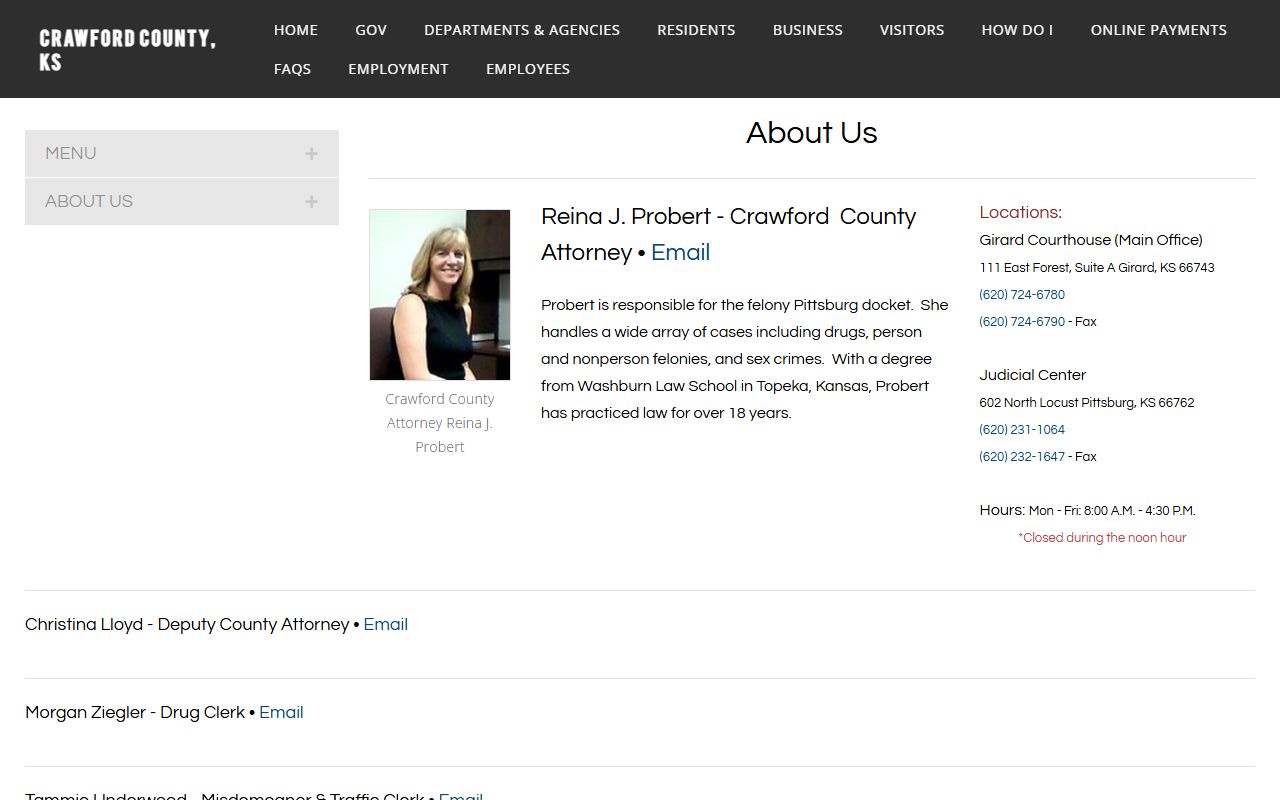
That division of prosecutorial work helps explain why criminal docket entries may identify both court location and assigned prosecutorial responsibility.
Sealed vs. Expunged Records
Sealed records are hidden from ordinary public access by law or court order. Expunged records are limited under a Kansas expungement order and statute, though specified agencies may retain access under the law. KBI's expungement fact sheet identifies K.S.A. 21-6614 for certain convictions, arrest records, and diversions, and also cites separate authorities for arrest records, minors, and wrongfully convicted persons. A Crawford County petition generally belongs in the court connected to the case or arrest record.
| Sealed | Expunged | |
|---|---|---|
| Visibility | Closed from public view by law or order | Public access is limited under the expungement order and statute |
| Law Enforcement | May retain access when authorized | May retain access in specific circumstances allowed by Kansas law |
| Eligibility | Depends on record type, court rule, statute, or order | Depends on Kansas petition requirements, waiting periods, completion, and statutory grounds |
Public Access to Criminal Court Records
Adult criminal case records are generally more accessible than juvenile, adoption, sealed, and mental-health records, but Kansas law still creates important limits. K.S.A. 45-220 addresses public-record request procedure. K.S.A. 45-221 lists exceptions, including criminal investigation records, correctional records beyond allowed categories, personal records that would be a clearly unwarranted invasion of privacy, protected addresses, and other confidential information. Kansas Supreme Court Rule 22 governs electronic access to district and appellate case records.
Key Statutes:
K.S.A. 45-220 - Kansas procedure for requesting access to or copies of public records.
K.S.A. 45-221 - Kansas public-record exceptions and redaction or separation rules for closed material.
Background Check Considerations
Kansas.gov offers a KBI name-based criminal history record search for a $30 purchase price, with published access from 4:00 a.m. to midnight Central and daily maintenance from midnight to 4:00 a.m. That statewide search is not the same as a Crawford County District Court file request. A court file may show local case details, documents, and dispositions that a background search summarizes differently or does not display in document form.
The Eleventh Judicial District Public Defender Office is listed by the Kansas State Board of Indigents' Defense Services at 506 N Pine, Suite A, Pittsburg.

Public defender references in docket entries identify counsel connections, not a separate public case-record database.
Important: Public court lookups are not a substitute for FCRA-compliant screening when law requires a regulated consumer report.
Restricted Criminal Court Records in Crawford County
Restricted criminal-related records include juvenile offender files, child-in-need-of-care matters, sealed cases, expunged records, victim identifying information in sex offenses, some mental-health and treatment records, criminal investigation records, and protected personal identifiers. The 11th Judicial District Recovery Court serves Crawford, Cherokee, and Labette counties as a court-supervised program for non-violent offenders with substance use disorders. Participation in treatment court can affect supervision and case outcomes, but it is not a public record search tool.
The 11th Judicial District Recovery Court page describes that court-supervised program.
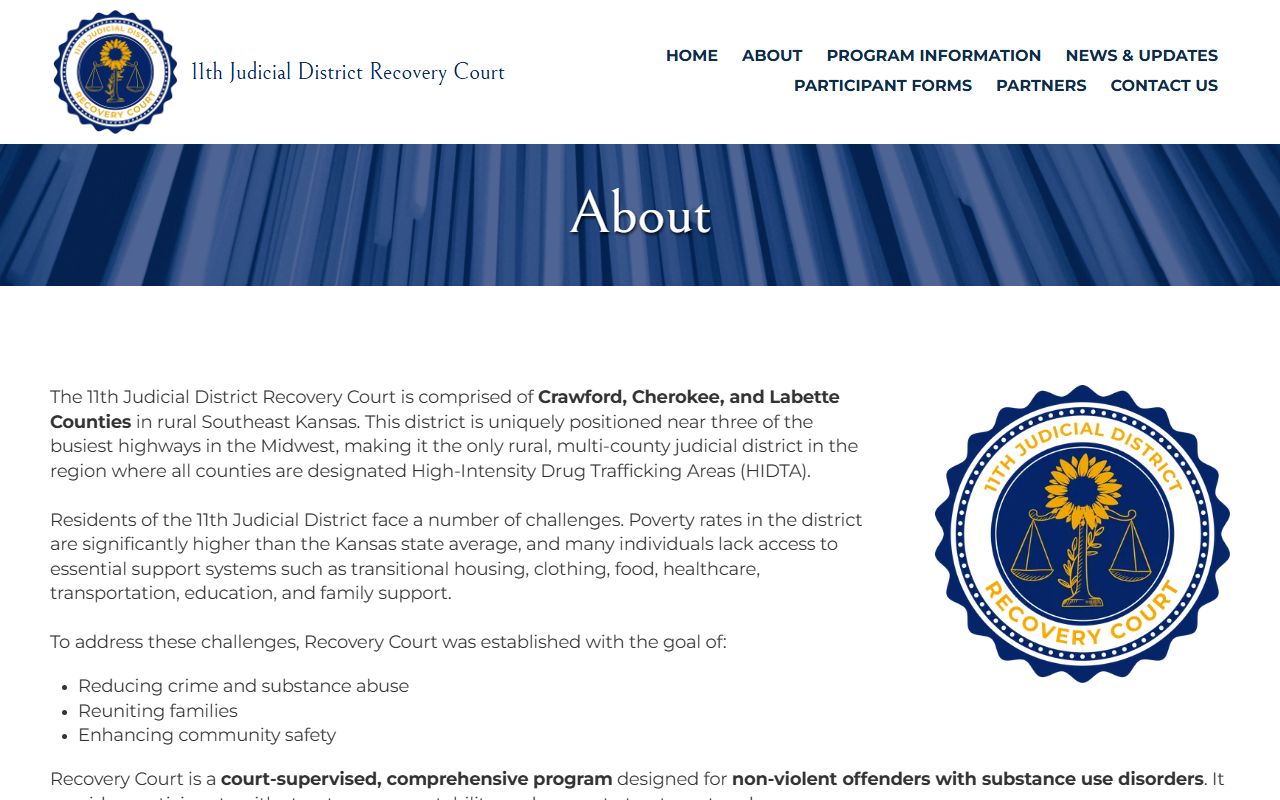
Recovery Court and Community Corrections details help interpret supervision and treatment references that may appear after a criminal case is filed.