
Crawford County Arrest Records and Court Charges
Crawford County arrest records are connected to law-enforcement and jail activity, including the Sheriff's Office, CRIMEWATCH, and the CRSO Inmate Search portal. The court charge record begins when the Crawford County Attorney files formal charges in District Court. The jail record may show a booking, custody status, booking number, or searchable jail-calendar information; the court file shows the accusation as filed with the clerk and later tracks hearings, amendments, dismissals, pleas, sentencing, or diversion-related outcomes.
The CRSO Inmate Search portal is published under a Kansas Open Records Act jail-calendar disclaimer and warns that custody location or status can change quickly. That warning fits the arrest side of the process. The court side changes through filings and orders, so charge status should be checked in District Court records before relying on an arrest entry.
The distinction matters because an arrest is not the same as a filed charge, and a filed charge is not the same as a conviction. The county jail roster is the better source for current custody and booking status, while criminal court records are the better source for the full case file and disposition. The general court records page covers other civil, domestic, probate, traffic, lien, and small-claims records that are not part of the arrest-to-charge path.
The Sheriff's Office posts agency information, app links, arrests, alerts, resources, and jail links on its Crawford County CRIMEWATCH page.
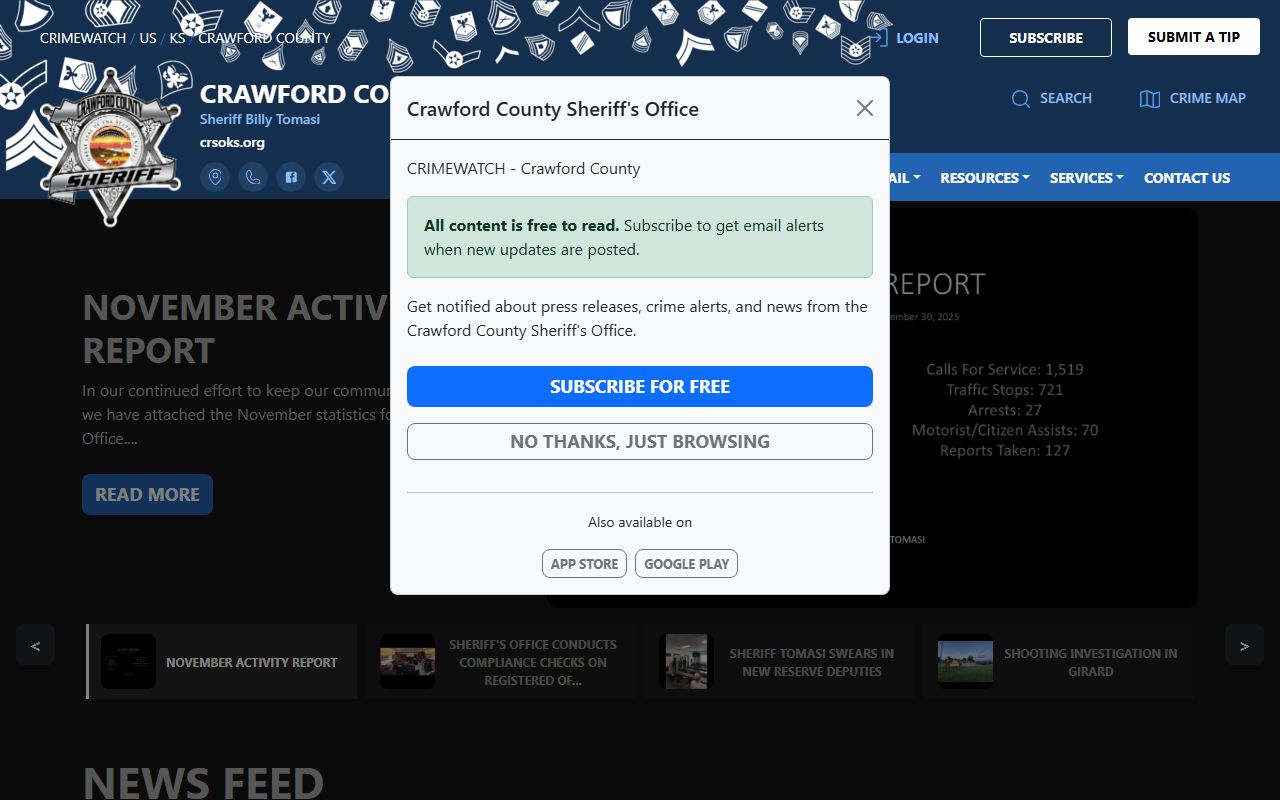
That sheriff channel is useful for arrest-side information, but formal court charges still need to be checked through court records.
How to Find Crawford County Arrest Records and Charges
Start by deciding which side of the record is needed. For current jail custody, use CRSO Inmate Search or sheriff resources and then move to the inmate records workflow. For filed charges, search Kansas CaseSearch and Crawford County District Court dockets. If the case is not online, send a written record request to the Clerk of the District Court division likely to hold the file. Girard is the main location for felony and misdemeanor criminal cases from 1991 forward, while Pittsburg is listed for bad-check criminal matters.
- Check the Sheriff's arrest and jail channels for booking or custody information when the event is recent.
- Search Kansas CaseSearch by defendant name or case number for filed Crawford County District Court charges.
- Review the docket entry for the charge, case number, judge, prosecutor, hearing type, and next court date.
- Request the complaint, disposition, or sentencing documents from the Clerk of the District Court if the public portal does not show the document.
- Use KBI or registered-offender searches only for the statewide record type they actually cover.
Crawford County's own arrest information page links users to the inmate roster, offender search, registered offenders, and VINE.
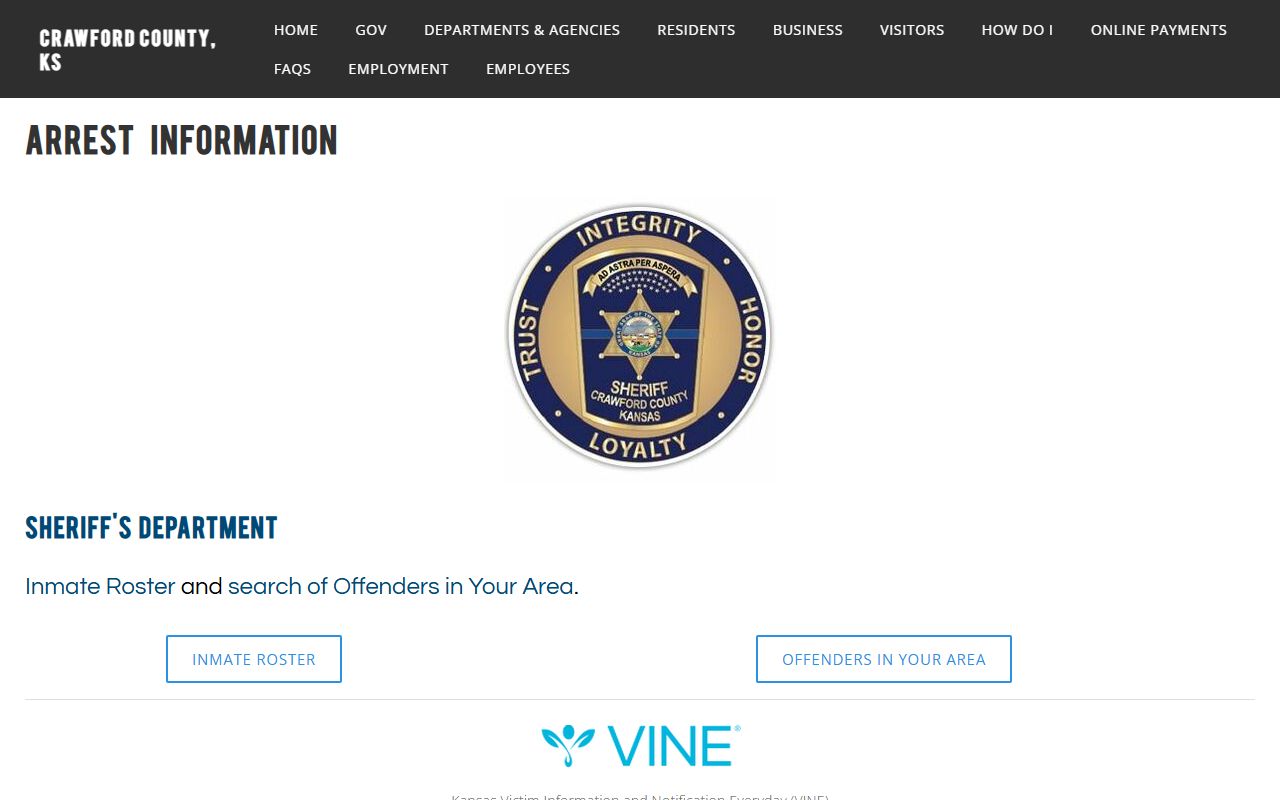
Those links are helpful starting points, but the filed charge status and final outcome belong in the court record.
How Charges Get Filed After an Arrest: Complaint, Information, and Indictment
After an arrest, law enforcement may book the person into jail and provide information to the prosecutor. In Crawford County, the official prosecution office is the County Attorney, not a district attorney. The County Attorney decides what Kansas criminal-law violations to prosecute and files the court case through District Court. The charging document can be a complaint or other prosecutor-filed document, and the filed charges may not match the wording that appeared at booking.
| Complaint | Information | Indictment | |
|---|---|---|---|
| Filed By | Prosecutor or authorized charging source | Prosecutor | Grand jury process when used |
| Common For | Initial criminal filing | Prosecutor-filed criminal accusations | Serious criminal matters when presented that way |
| Starts | The court case or charge record | The court case or formal charge set | The court case based on grand jury action |
Charge Status and What It Means
Charges can change as a Crawford County criminal case moves through court. A prosecutor may amend or reduce a charge, add a new charge, dismiss a count, or resolve a matter through plea, sentencing, or diversion. Docket labels such as Arraign/Plea, Plea Hearing, Sentencing, Probation - Violation, and Revocation show stages in the case, but the disposition controls the final meaning of each charge.
| Status | What It Means |
|---|---|
| Pending | The filed charge has not reached final disposition in the available court record. |
| Amended / Reduced | The prosecutor or court record changed the charge from the original filed version. |
| Dismissed | The charge did not proceed to conviction in that count, though other counts may remain. |
| Diversion | A prosecutor-approved program may avoid conviction if completed, depending on the case and agreement. |
| Sentenced | The case reached a conviction or plea outcome and the court entered punishment or supervision terms. |
Charges vs. Convictions
An arrest or charge is not proof of guilt. A Crawford County charge record can show accusations that are later dismissed, amended, reduced, diverted, or resolved differently for each count. The court record should be read count by count because one arrest can produce multiple charges with different outcomes. For background or legal decisions, rely on the final disposition, sentence, and any later expungement or sealing order rather than a booking entry alone.
| Charge | Conviction | |
|---|---|---|
| Stage | Accusation filed after arrest or complaint review | Outcome after plea, verdict, or adjudication |
| Record Source | Complaint, docket, court charge list, and prosecutor filing | Disposition, journal entry, sentencing order, and case outcome |
| Can Appear With No Conviction | Yes | No, conviction requires a court outcome |
Sealed vs. Expunged Records
Sealing and expungement limit public access, but they do not mean the same thing. Sealed records are closed from ordinary public view by law or court order. Expunged records are restricted under Kansas expungement law and a court order, with some agency access still allowed in specified circumstances. Kansas expungement is petition-based, and the research identifies K.S.A. 21-6614 for certain convictions, arrest records, and diversions.
| Sealed | Expunged | |
|---|---|---|
| Visibility | Hidden from public search by law or order | Public access limited under an expungement order |
| Law Enforcement | May still have authorized access | May still have access under Kansas statutory exceptions |
| Eligibility | Depends on case type, court rule, and order | Depends on statute, waiting period, completion, prosecutor notice, and court ruling |
Charge Codes and Severity Levels
Crawford County court charge records may include offense names, statutory references when listed, filing dates, prosecutor information, bond terms, hearing events, plea status, dismissal or amendment activity, and final disposition. The research did not locate a Crawford County public table of every charge code, so charge interpretation should stay tied to the document actually filed in District Court. Felony and misdemeanor criminal matters from 1991 forward are listed for Girard; bad-check criminal matters are listed for Pittsburg.
Registered offender information is a separate statewide and local public-safety category. The KBI registered offender page provides the state search entry and disclaimer.
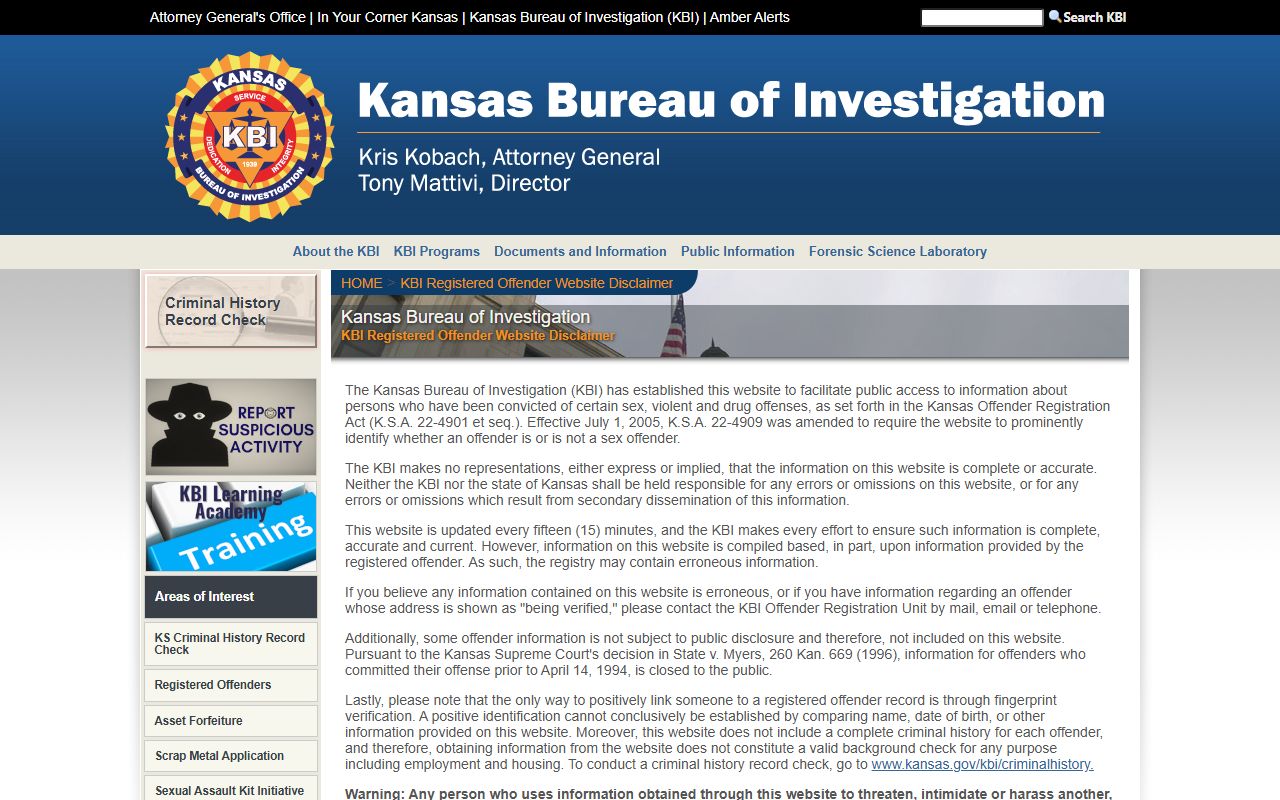
A registered-offender search should not be treated as a complete list of Crawford County arrests or filed court charges.
Statewide Charge and Criminal History Lookups
Kansas offers several statewide tools, each with a different purpose. The KBI criminal history search is a fee-based statewide criminal-history check, not a Crawford County court file viewer. KBI registered offender search and Crawford County OffenderWatch cover published registered offenders, not every arrest. Kansas VINE and VINELink provide custody status and notification, not full court pleadings. KDOC KASPER is for state prison or supervision records and is updated each working day, separate from the county jail.
The KBI also publishes a Kansas Most Wanted page and tip line.
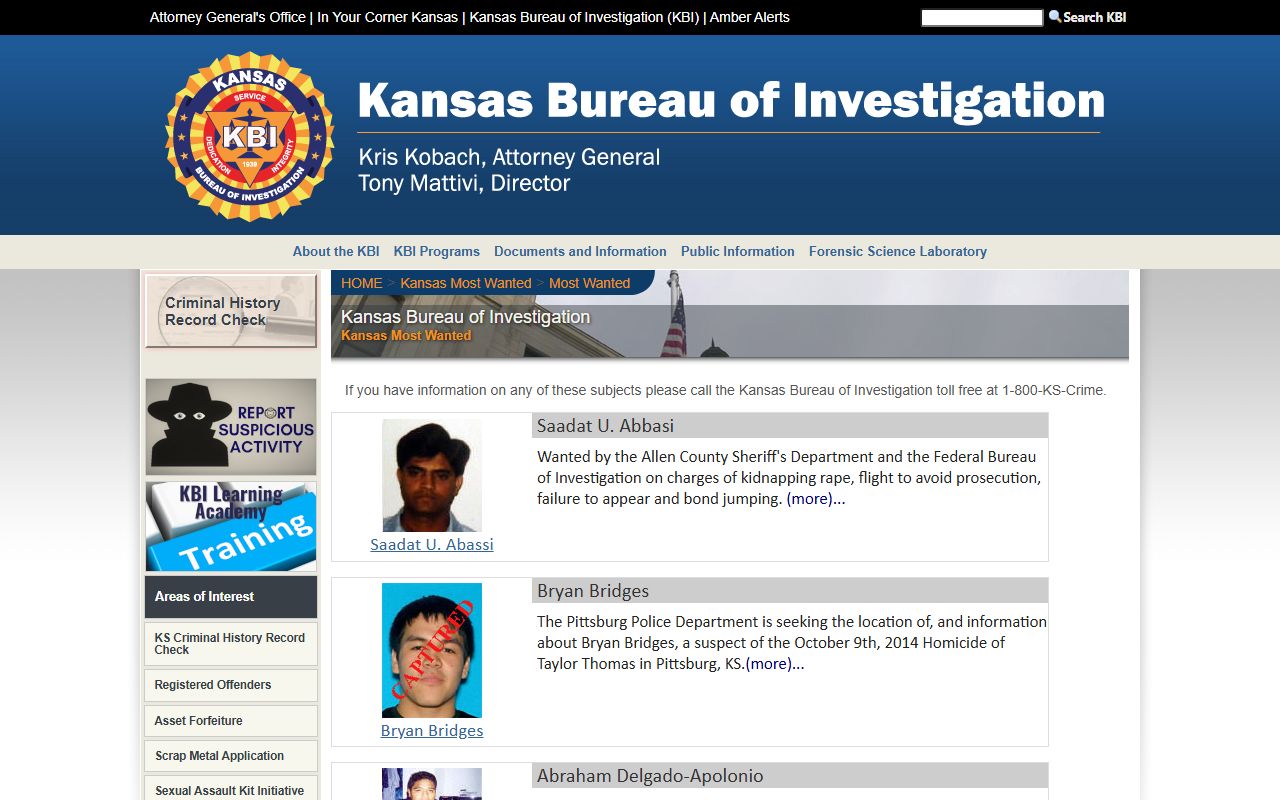
Most-wanted and warrant-related pages can provide public-safety leads, but they do not replace the District Court charge record or final disposition.
CRIMEWATCH also has a statewide warrants feed at crimewatch.net/us/ks/warrants.
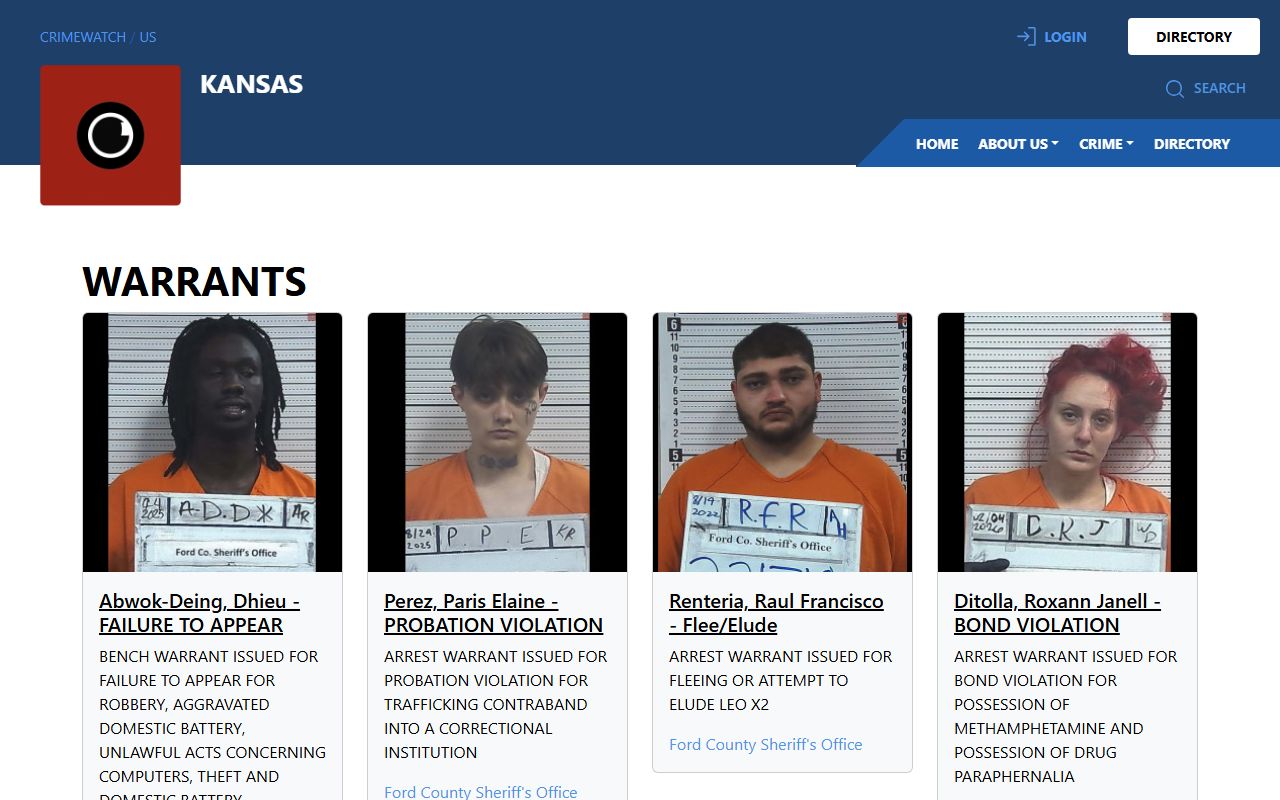
For Crawford County, confirm any warrant or wanted information with the Sheriff's Office, court, or the agency that posted the item.
Background Check Considerations
A person checking court charges for personal awareness should use the official court, sheriff, and state systems for their intended purpose. A person making employment, tenant, credit, insurance, or other regulated eligibility decisions may need an FCRA-compliant consumer report rather than a casual public-record search. The safest record reading practice is to separate arrest, filed charge, conviction, sentence, custody, warrant, offender registration, and expungement status because each comes from a different legal source.
Important: Public arrest and charge lookups do not provide a regulated consumer report for FCRA-covered decisions.
Restricted Charge Records in Crawford County
Some charge and arrest-related records are restricted even when adult criminal cases are generally public. Juvenile offender records, child-in-need-of-care matters, sealed cases, expunged records, adoption records, mental-health and treatment records, victim identifying information, protected addresses, criminal investigation records, and correctional records outside allowed public categories may be withheld or redacted. K.S.A. 45-221 includes several exceptions relevant to criminal investigation, correctional, and personal records. Kansas Supreme Court Rule 22 governs electronic access to district and appellate case records, so a document can be public at the courthouse but not available remotely in the same form.
The Crawford County Attorney, Reina Probert, maintains a Girard main office at 111 East Forest, Suite A, phone (620) 724-6780, and a Pittsburg Judicial Center office at 602 North Locust, phone (620) 231-1064. The office prosecutes Kansas criminal-law violations, juvenile offenders, child protection matters, treatment proceedings, appeals, and victim/witness matters. Those prosecution duties explain why charge records, diversion references, and victim-related restrictions may appear in the same criminal case ecosystem.
For a copy request, send the court enough information to distinguish the arrest from the filed case: the defendant's full name, approximate arrest or filing date, case number if known, charge or offense description if known, and whether the needed item is the complaint, docket, disposition, sentencing order, or probation-related record.